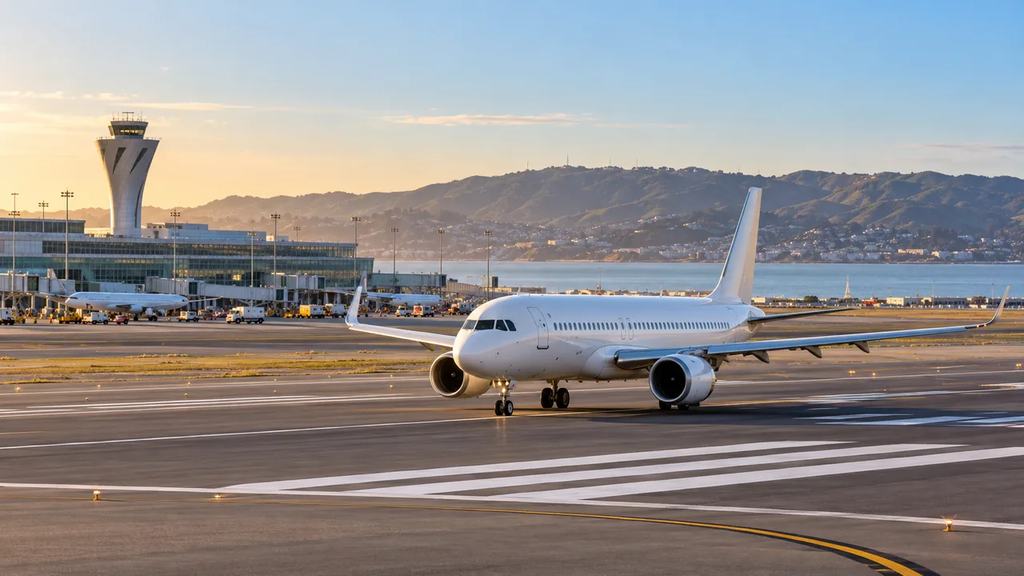
San Francisco International Airport completed its 2026 Runway 1R repaving project ahead of schedule. For customers traveling through SFO, the reopening is welcome news: airport officials expect a lower risk of delays caused by runway capacity when weather is not a factor. Travelers should still check their flights and allow realistic time for Bay Area traffic and airport pickup coordination.
What changed at SFO?
SFO closed Runway 1R on March 30, 2026, for a major repaving and infrastructure project. In its September 16 project update, the airport said the work was ahead of schedule and the runway would reopen no later than September 29, earlier than the original October timeline.
The project included new pavement, taxiway improvements, upgraded lighting, fresh markings, and new guidance signs. SFO reported that crews placed 200,000 tons of asphalt, replaced 64 miles of electrical cable, installed 2,440 light fixtures, and replaced 88 guidance signs.
Why the reopening matters to travelers
During construction, SFO said runway capacity and new arrival procedures reduced the number of aircraft that could arrive each hour. With Runway 1R back in service and revised Federal Aviation Administration procedures allowing modified parallel landings, the airport expected arrival capacity to rise to 45–48 flights per hour.
That does not mean every flight will operate on time. Fog, wind, airline operations, air-traffic restrictions, and conditions at other airports can still cause delays. The practical benefit is that SFO expects less delay pressure from the runway project itself when weather is not a factor.
What customers should do before an SFO pickup
- Check the airline’s app or website before leaving for the airport.
- Share the airline, flight number, arrival date, and passenger mobile number with the transportation provider.
- Wait until baggage is collected and follow the confirmed pickup instructions.
- Use the terminal, level, door, and zone shown on nearby signs when describing your location.
- Keep your phone available after landing in case the pickup location or timing changes.
Flight tracking helps coordinate an arrival, but it does not show how long immigration, baggage claim, or walking through the terminal will take. Clear communication after landing remains important.
Bay Area traffic still affects the ground portion of the trip
An airport runway reopening does not remove roadway congestion. Travel between SFO and San Francisco, Silicon Valley, the East Bay, or Wine Country can vary with commute periods, bridge traffic, construction, sporting events, and conventions.
If an airport transfer leads to a meeting, cruise departure, wedding, or another fixed appointment, share the required arrival time—not only the flight schedule. A realistic ground-travel buffer remains useful even when the flight arrives on time.
Planning an SFO departure
For a ride to SFO, start with the airline’s recommended check-in time and work backward. Add estimated driving time, a traffic margin, and the time needed to unload and reach the correct terminal. Confirm the terminal shortly before departure because airline assignments can change.
Customers traveling with several passengers, large suitcases, strollers, mobility equipment, golf bags, or presentation cases should describe those items when reserving. The right vehicle depends on luggage as well as passenger count.
Arrange private SFO transportation
Limo Classic provides private, non-shared transportation for SFO, hotels, business travel, families, events, and destinations throughout the Bay Area. Review our airport transportation service or contact Limo Classic with your flight and destination details. Call 415-535-3869 or email info@limoclassic.com.
Frequently asked questions
Does the runway reopening guarantee fewer flight delays?
No. SFO expects reduced delay potential from runway capacity when weather is not a factor, but weather, airline operations, air-traffic restrictions, and conditions elsewhere can still affect a flight.
Should I still provide my flight number for a pickup?
Yes. The airline and flight number help identify schedule changes, while direct communication after landing helps coordinate the actual pickup.
How early should I leave for SFO?
Use the airline’s recommended check-in window, then add estimated drive time and a reasonable buffer for current traffic, events, and terminal access.