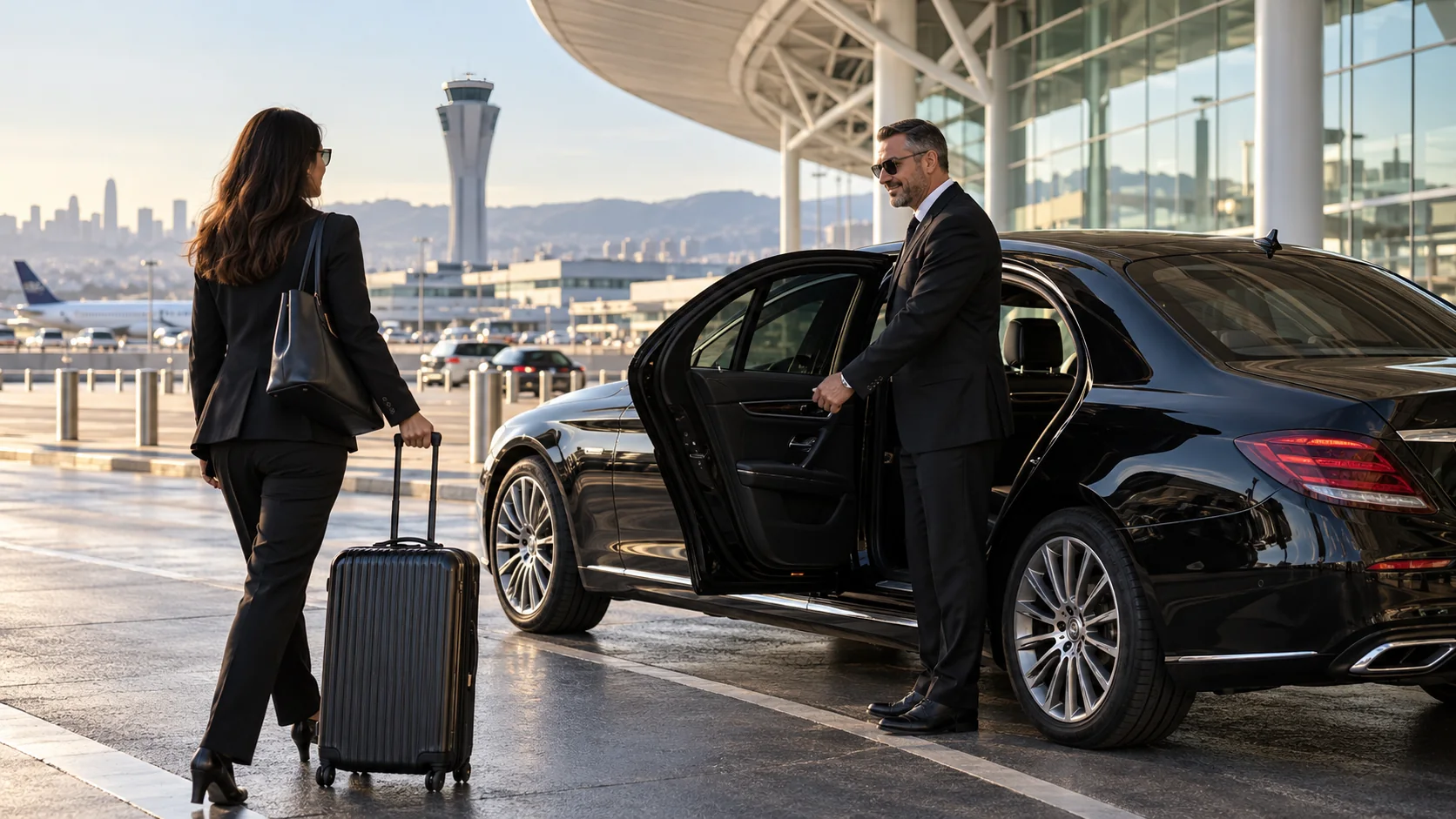
Arriving at San Francisco International Airport is easier when you know exactly where and when to meet your car. This SFO airport pickup guide explains how to coordinate with a private driver, account for baggage and customs, and avoid confusion at a busy terminal curb.
Plan your SFO airport pickup before the flight
A smooth pickup starts with complete reservation details. Share the airline, flight number, arrival date, passenger count, mobile number, destination, and the number and size of bags. Flight information helps the transportation team monitor the arrival, while a working mobile number lets the driver and traveler coordinate after landing.
If your itinerary includes a codeshare, provide the operating airline and flight number shown on the day of travel. Terminal assignments can change, so final meeting instructions should always follow the current flight and airport signs.
Where to meet your driver at SFO
The correct pickup point depends on your terminal, the type of transportation, airport rules, and current operations. SFO states that terminal curbs are for active passenger pickup and drop-off only; vehicles cannot wait at the curb. For that reason, your driver may stage away from the terminal until you have collected your bags and are ready to walk to the agreed pickup point.
Domestic arrivals
After leaving the aircraft, follow signs to baggage claim for your terminal. Collect all checked luggage before contacting your driver. Then confirm your terminal, door or zone, and whether you are on the arrivals or departures level. Do not rely only on the gate number, because gates and baggage areas do not always correspond to the same curb location.
International arrivals
Most international travelers who are ending their journey at SFO must complete immigration, collect baggage, and clear customs before entering the public arrivals area. According to SFO, passengers exit the Federal Inspection Area through the doors marked “San Francisco” into the International Arrivals Meeting Area. Processing time varies, so contact your driver only after you can estimate when you will be ready.
Why curbside timing matters
Airport curbs are active loading zones, not parking areas. Your driver needs a clear ready message before approaching the terminal. A useful message includes your name, terminal, door or zone, number of travelers, and a brief description of your group or luggage. Keep your phone on, allow notifications, and stay at the agreed location unless the driver asks you to move.
If you want an in-terminal greeting, request it when booking. Meeting procedures, parking, and any extra waiting time should be confirmed in advance rather than assumed on arrival.
Information to send when you are ready
- Your full name and reservation name
- Airline and flight number
- Domestic or international terminal
- Door, zone, or meeting-point sign
- Total passenger and luggage count
- A reachable mobile number
- Any child seat, mobility, or accessibility needs arranged in advance
Allow time for baggage, customs, and assistance
An arrival time is the time the aircraft reaches the airport, not the moment a passenger reaches the curb. Taxiing, deplaning, walking through the terminal, baggage delivery, customs, and mobility assistance can all add time. International arrivals usually require more coordination because passengers may not be able to use their phones during inspection and baggage processing.
Families and groups should wait until everyone has collected belongings before sending the final ready message. If luggage is delayed, tell the transportation provider promptly so the pickup plan can be adjusted.
What happens when a flight is early, late, or diverted
Flight monitoring helps the transportation team see schedule changes, but it does not replace direct communication. Weather, gate changes, baggage delays, and diversions may affect the pickup even after the flight lands. Turn on your phone after arrival and check messages before proceeding to the curb.
If the itinerary changes before departure, send the updated flight information as soon as possible. If the flight diverts to another airport, contact the provider to discuss a new plan; do not assume the original SFO pickup will transfer automatically.
A simple arrival-day checklist
- Keep the reservation confirmation and driver contact details available.
- Turn on your phone after landing and review any messages.
- Collect every checked bag before confirming that you are ready.
- Verify the terminal, level, door, or pickup zone.
- Send a clear ready message and remain at the agreed meeting point.
- Before entering the vehicle, confirm the driver or vehicle details from your reservation.
Private airport transportation without the guesswork
Limo Classic provides prearranged, private transportation from SFO to San Francisco, Silicon Valley, the East Bay, Wine Country, and other Bay Area destinations. Review our airport transfer service, read our guide on how early to leave for SFO, or request your ride. For help, call 415-535-3869 or email info@limoclassic.com.
Frequently asked questions
Can my driver wait at the SFO terminal curb?
No. SFO limits the terminal curb to active pickup and drop-off. Your driver coordinates an approach after you are ready at the agreed location.
Should I contact the driver as soon as the plane lands?
You may send a brief arrival update, but the most useful ready message comes after you have deplaned, collected baggage, and confirmed your terminal pickup point.
Where do international passengers meet their driver?
After immigration, baggage claim, and customs, passengers ending their journey at SFO enter the public International Arrivals Meeting Area. Your reservation instructions will identify the final meeting point or curbside zone.
What if I cannot find the pickup location?
Stay inside a safe public area, call or message the transportation provider, and share the nearest terminal, door, zone, or visible sign. Avoid changing levels or terminals until the meeting point is confirmed.